IDs That Mean Something
A hands-on CIKM '26 tutorial on semantic IDs for recommender systems — from raw integer IDs to semantic IDs, across generative and discriminative applications.
Overview
Traditional recommender systems rely on arbitrary integer IDs to identify items — identifiers that carry no semantic information and force models to learn representations purely from interaction data. Semantic IDs address this by encoding semantic information directly into the item identity itself: items become discrete token sequences that reflect content, hierarchy, and relationships, rather than opaque lookup keys.
This tutorial traces the evolution from raw IDs to semantic IDs as a scalable means of information utilization in recommender systems, offering a comprehensive review of their development and applications across multimodality, cold-start, and cross-domain recommendation. Hands-on exercises guide attendees through building and evaluating semantic IDs, training models, and exploring cross-domain transfer, before closing with open challenges such as dynamic semantic IDs and multi-stakeholder utility.
This tutorial covers:
- The evolution from raw IDs → auxiliary content → semantic IDs, and why each stage falls short.
- Semantic IDs in both generative (e.g., TIGER) and discriminative (e.g., YouTube ranking) recommendation.
- Multimodality, collaborative signals, and cross-domain transfer via semantic IDs.
- Hands-on construction and evaluation of semantic IDs on the Amazon Reviews dataset.
This site curates:
- Tutorial materials — session outline, learning goals, and hands-on notebooks.
- Papers — curated bibliography spanning raw IDs to semantic IDs.
- Presenters — the seven researchers behind the tutorial.
Explore
Tutorial
Learning goals, session outline, and hands-on materials.
Papers
Curated collection of key papers, with search/filter.
Presenters
Profiles and affiliations of the presenters.
Editions
Past and upcoming editions of this tutorial.
Presenters
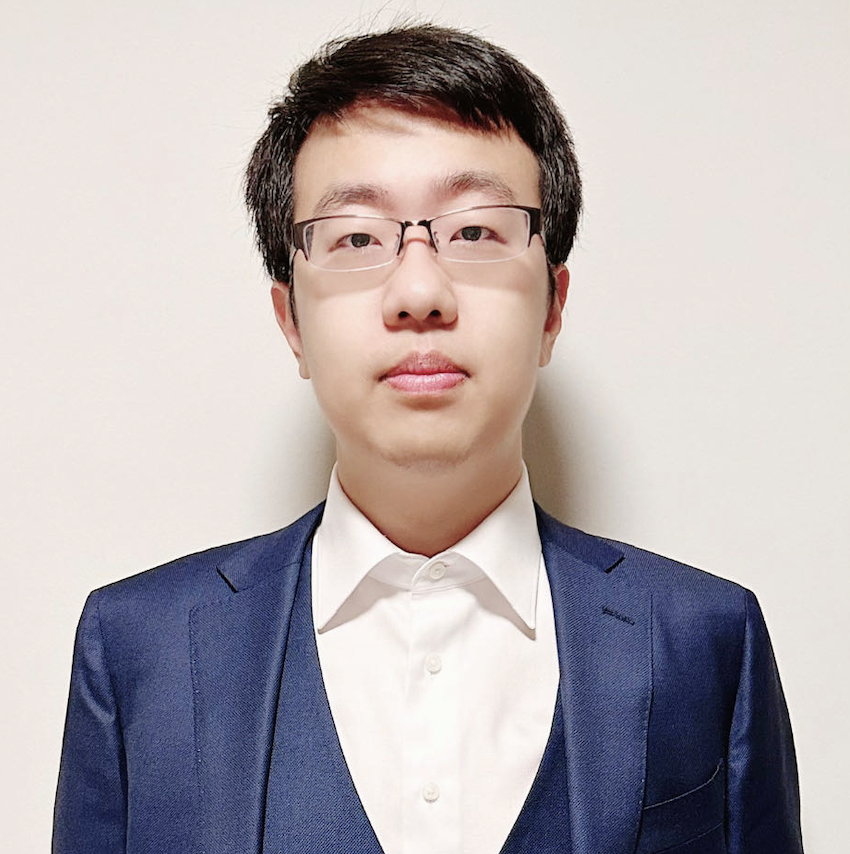
Roger Zhe Li
Huawei Ireland Research Center

Aghiles Salah
Huawei Ireland Research Center

Mete Sertkan
Huawei Ireland Research Center
Changhong Jin
University College Dublin
Maintained by Roger Zhe Li — Last updated: 2026